
Partner
BITMARCK Holding GmbH
Case study10
Multi-language security analysis tool with Cortex API integration and visual data evaluation
Partner
BITMARCK Holding GmbH
Industry
Healthcare
Core technologies
Python · HTML5 · C++
At a glance
For BITMARCK, the IT service provider behind many German statutory health insurers, DuoByte contributed to a network analysis tool for security monitoring. The tool queries security-relevant information automatically through the Cortex API, analyzes it and presents it visually. Python, C++ and an HTML interface each handle the part of the job they suit best.
Our role: DuoByte supported BITMARCK as an external development partner and contributed to the network analysis tool that queries data from the Cortex API and prepares it for security analysts.
Project work
How the project came together: from the context and requirements through implementation to where it stands today.
Context
BITMARCK Holding GmbH, based in Essen, develops and operates IT solutions for Germany's statutory health insurance system. The basis for this is the statutory health insurance software standard BITMARCK_21c|ng, which the connected insurers use. The group's customers include company and guild health insurance funds (BKK and IKK), DAK-Gesundheit and other substitute funds. According to the company, more than 80 percent of German statutory health insurers are BITMARCK customers.
For an IT service provider of this size, monitoring its networks for security issues is a permanent task. This is the setting for the network analysis tool, which uses data from Cortex systems through their API.
Challenge
Security analysts need fast, reliable access to security-relevant information from the Cortex systems. This information was to be queried systematically and automatically through the Cortex API, so that it is available in a structured form for analysis.
Network data is complex. For analysts to interpret it efficiently and spot threats, the queried data has to be analyzed and presented clearly.
Some analysis steps are compute-intensive. The tool therefore had to be quick to develop while still performing well wherever larger amounts of data are processed.
Solution
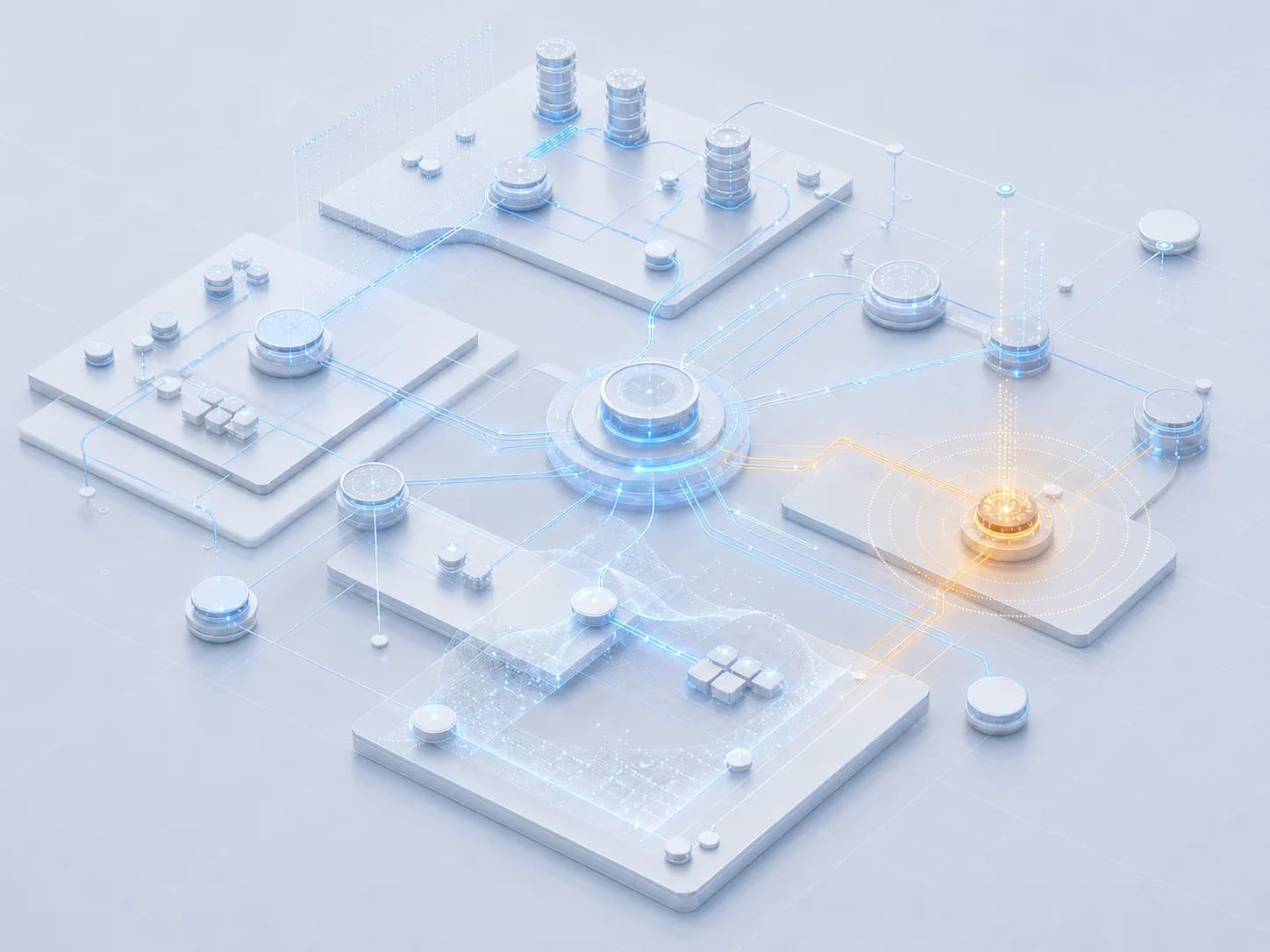
The tool combines three languages with clearly separated responsibilities. Python handles the backend logic and communication with the Cortex API, C++ the performance-critical analysis algorithms, and HTML the graphical user interface.
For analysts, the tool brings the queried information together in one interface:
Implementation
Splitting the work across languages reflects a simple trade-off between development effort and runtime. Python suits API communication and orchestration because queries and data preparation are quick to build and adjust. C++ is used where analysis algorithms need significant compute time.
The interface is built with HTML5, CSS3 and JavaScript and adapts to different screen sizes as a responsive application. The Cortex API serves as the data source through which the tool queries security-relevant information.
Outcome
With the tool, security analysts query information from the Cortex systems automatically and see the results in visual form. The visualization makes anomalies in complex network data easier to spot and gives security decisions a traceable data basis.
Product & context
Selected views show how the system was conceived and implemented within its domain context.


System architecture
Technologies were combined to suit the task, operating model and long-term maintainability.
Related services
API integrations, ERP and accounting connections, PDF imports and automated jobs that move data reliably between your systems.
Learn moreInternal tools, dashboards and SaaS products that follow your processes instead of bending them. Designed and coded by the founders themselves.
Learn moreKeep exploring
Next case study

Your project
Tell us what your system needs to do. We bring structure to requirements, architecture and delivery.